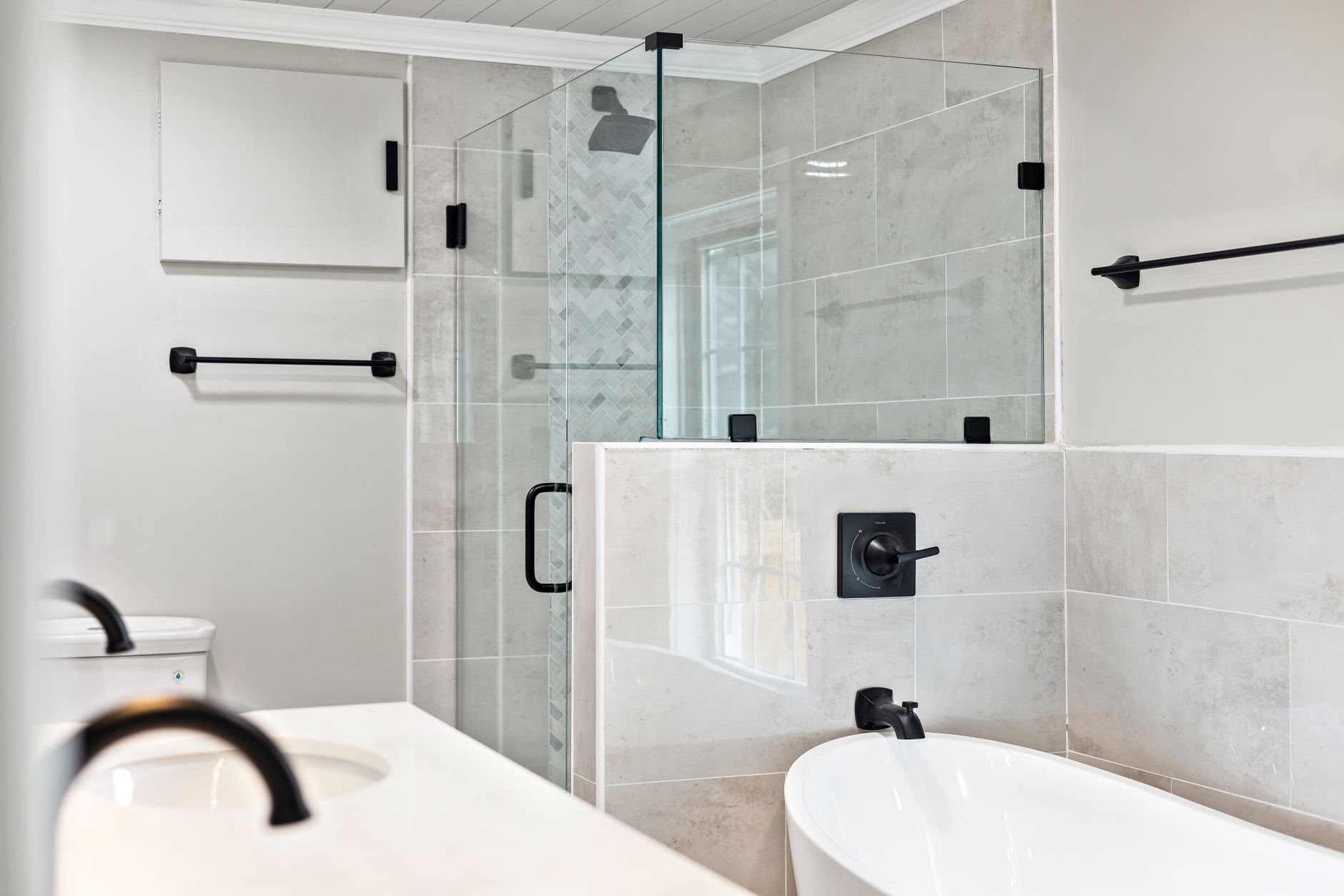
Tear the tile off one shower wall and you find out very quickly that a bathroom is a single system pretending to be four separate ones. The supply lines that feed the shower valve usually run through the same stud bay as the ones feeding the sink. The waste line from the tub trap and the waste line from the cabinet often meet inside the same wall. So a job that started as a shower rebuild becomes a decision about the rest of the room, and the piece of casework that takes the most abuse from that decision is the cabinet under the sink.
That is the honest reason so many homeowners end up replacing the vanity in the same fortnight they replace the shower pan. Not fashion, and not an upsell. Once the wall is open and the plumber is already standing there with a torch and a bag of fittings, moving a drain three inches costs an hour. Doing it a year later costs a day, a new section of drywall, a repaint, and a second round of dust sheets through the hallway.
This is a walk through the fixture side of that work: sizing, rough in heights, valve types, materials and the mistakes that show up eighteen months after the last invoice is paid.
Sizing Starts at the Drain, Not at the Door
Most people size a cabinet by measuring the wall and picking the widest unit that fits. That is the right measurement taken in the wrong order. The first number that matters is the height and horizontal position of the existing waste stub, because that single point decides which cabinets are usable without moving pipework.
A standard waste stub sits somewhere between eighteen and twenty two inches off the finished floor. A floor standing cabinet with a full back panel and a deep drawer at the bottom will collide with a stub at eighteen inches unless the drawer is notched. A shop that notches drawers properly cuts the back and the base, boxes the void, and edge bands the cut. A shop in a hurry cuts a hole with a jigsaw and leaves raw particle board an inch from a compression fitting, which is exactly where a slow weep will find it.
Wall hung units dodge that problem and create another. They need blocking, meaning real timber let into the studs before the board goes on, and they need it at the right height for the bracket you actually bought, not the bracket you think you will buy. Blocking is fifteen minutes of work at rough in stage and a genuinely miserable retrofit afterwards. If there is any chance of a floating cabinet in the room’s future, block the wall while it is open.
Comfort Height Is a Choice, Not a Default
The old standard put a countertop at thirty or thirty one inches. Comfort height is thirty four to thirty six, matching a kitchen counter. Taller is easier on the back for most adults and worse for children, and it changes the mirror line and the light fitting line with it.
Pick the height before ordering anything, then hold every other decision to it. A vessel bowl sitting proud on a thirty six inch top puts the rim near forty inches, which is high enough that water runs down your forearms and back onto the floor. That is the single most common regret in this category, and it is a geometry problem rather than a taste problem.
Clearances That Elbows Care About
Building code in most of the state wants a minimum of twenty one inches of clear floor in front of the basin, and fifteen inches from the centre of the bowl to any side wall. Those are minimums for legality, not targets for comfort. Twenty four inches of front clearance and eighteen to the wall is where a room stops feeling tight. In a small bathroom, losing three inches of cabinet width to gain those clearances almost always reads as more space, not less.
Door swing is the other one. A hinged shower door and a hinged cabinet door on adjacent walls will find each other. Check the arcs on paper before anything is ordered.
Tops, Bowls and the Joint Between Them
An integrated top and bowl moulded in one piece has no joint to fail. That is its whole argument, and it is a strong one in a family bathroom. The trade off is that a chip in the bowl is a chip in the countertop, and repairs are visible.
Quartz with an undermount bowl is the common upgrade. The joint is sealed with silicone and clamped from below, and it fails in one of two ways: the installer used the wrong sealant, or the clips were overtightened and the bowl slowly pulled away from the stone. Ask what sealant is being used. A neutral cure silicone rated for wet areas is correct. Anything acetic cure smells of vinegar and will attack some stone.
Natural stone tops in a bathroom need a different conversation. Marble etches on contact with acid, and the acids in a bathroom are not lemon juice, they are toilet cleaner, hair products and nail polish remover. A honed finish hides etching far better than a polished one, because there is no gloss for the dull patch to interrupt.
The Valve Is the Part You Cannot Change Later
Everything above the wall can be swapped in an afternoon. The valve body behind it cannot, so it deserves more thought than the handle that hides it.
A pressure balance valve reads the ratio of hot to cold and holds it steady when a toilet flushes. A thermostatic valve reads the actual temperature and holds that instead, which lets you set a number and get the same shower every morning. Thermostatic bodies cost more and are the right call on any system feeding multiple outlets, because they hold temperature when a second outlet opens.
If you are running a rain head and a hand shower, you need either a diverter or a two outlet valve, and you need to know whether they can run together. Many diverters send water to one outlet or the other, never both at once. Homeowners discover this on the first morning, which is far too late.
Flow Rate Is a Real Constraint
State regulation caps shower heads at one point eight gallons per minute. A rain head at that flow spread across a wide face gives a gentle drizzle, which some people love and others find useless because it will not rinse conditioner out of long hair. If you want rain coverage and rinsing power both, the answer is usually a smaller diameter head mounted closer to the head, not a wider one mounted further away.
Check the supply too. A half inch line feeding an array of body sprays will disappoint no matter what is spent on the trim. Measure the static pressure at an outside spigot before designing anything with multiple outlets, and measure it in the morning when the street demand is high.
Finishes That Age at the Same Rate
Mixing finishes is fine. Mixing finish qualities is not. Living finishes such as unlacquered brass will change colour over a year and look intentional if everything in the room is doing the same thing, and look like a mistake next to a chrome shower arm that stays bright forever.
Brushed nickel hides water spots better than polished chrome and shows fingerprints less than matte black. Matte black is the least forgiving in hard water areas, because dried mineral deposits are pale and the surface is dark. That is not a reason to avoid it, but it is a reason to keep a squeegee within reach of the glass.
Whatever the finish, check that the shower trim, the sink taps and the accessories all come from one manufacturer’s range if you want them to match. Two makers’ versions of the same finish name rarely agree, and the difference is obvious once they are eighteen inches apart on the same wall.
What to Order Before the First Tile Comes Off
Order the valve body, the shower trim, the cabinet and the top before demolition begins. Not because it is tidy, but because the rough in heights depend on the actual products. A plumber setting a valve without the model in hand sets it at a generic height and hopes, and the trim plate arrives three weeks later with a different escutcheon size that does not cover the hole cut for it.
Cabinets and stone tops carry the longest lead times, often six to ten weeks for anything cut to size. A crew that has torn out a room and is standing around waiting on stone is a crew charging you for a stalled site.
Five Failures Worth Naming
The first is a cabinet installed on an unlevel floor with no scribe, so the top sits proud at one end and the sealant line runs as a wedge. The second is no shut off valves under the basin, which turns a dripping tap into a whole house water shutdown at eleven at night. The third is an extractor fan sized for a powder room fitted to a full bathroom, which sends every ounce of shower steam straight into the cabinet finish. The fourth is a mirror hung dead centre on the wall instead of centred on the basin, which reads as wrong without anyone being able to say why. The fifth is grout colour chosen from a dry sample chip, which dries two shades lighter than the wet one everybody agreed on.
None of those are expensive to prevent. All of them are expensive to fix once the room is finished, the crew has gone, and the only way back into that wall is through fresh paint.
Need help in Lakewood?
Call (562) 688-5450